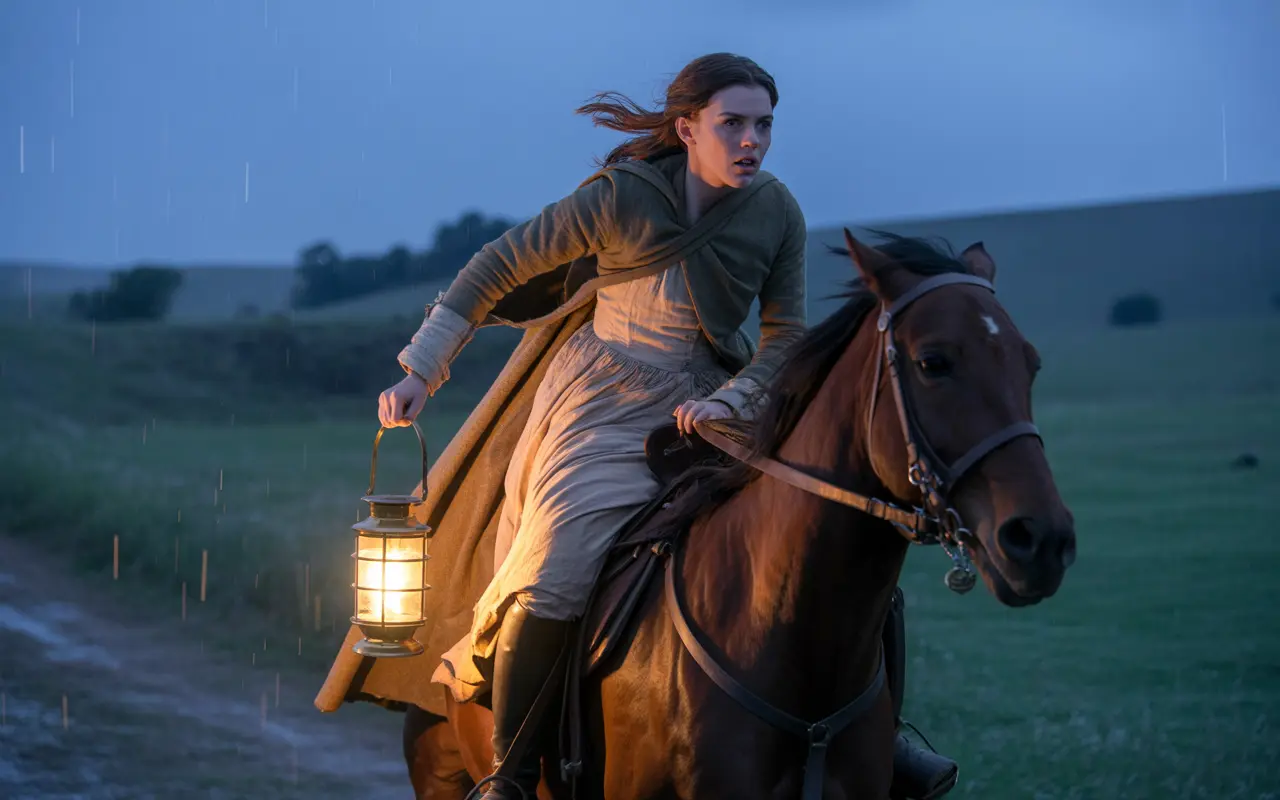
The night was supposed to be quiet.
In the spring of 1777, the air in rural New York still carried the damp chill of winter. The small community around Fredericksburg lay wrapped in darkness, with only the occasional crackle of a dying hearth marking the end of another day. Most families slept in peace, believing—hoping—that the American Revolution’s chaos would not reach them that night.
Fifteen-year-old Sybil Ludington was among them.
She had spent the day helping her mother with chores, tending to her younger siblings, and listening—always listening—to the murmurs of men at her father’s table. Colonel Henry Ludington was a respected militia leader, and their home had become a place where whispered strategies, fears, and dreams of independence drifted through the halls like ghosts.
Sybil absorbed everything.
She admired her father deeply, but she also felt restless. War shaped every conversation, every decision, every breath. She wanted to help. But she was just a girl—or so people told her.
That quiet night, everything changed.
The Messenger at the Door
It was nearly 9 p.m. when frantic pounding erupted at the Ludingtons’ door. The dogs barked sharply, slicing through the silence. Sybil jolted awake as her father hurried downstairs. She followed, her heart racing.
A rider stood outside, mud splattered across his boots, his face pale with exhaustion.
“Colonel Ludington,” he gasped, “Danbury is burning.”
British troops, along with Loyalist forces, had attacked the Connecticut town—destroying homes, supplies, and weapons crucial to the Continental Army. American militia units needed to be warned immediately if there was any hope of defending nearby communities and stopping the British advance.
“But I can’t ride any farther,” the messenger admitted, his voice trembling. “My horse is spent. And many of your men are scattered miles apart—some twenty, some thirty.”
Colonel Ludington pressed a hand to his forehead. It was dark, the roads unsafe, the terrain rough. He had no available riders. Leaving would mean abandoning his station and the hundred men poised to regroup at his home.
“We have to warn them,” he muttered helplessly.
Sybil stepped forward before she could stop herself.
“I’ll go.”
Her mother gasped. Her father turned to her sharply, ready to refuse. But something in Sybil’s expression halted him—determination, bravery, a fire he recognized.
“You’re too young,” he said.
“No one will expect a girl,” Sybil answered. “And I know the roads better than any rider. Let me do it.”
Silence stretched between them. Her father studied her face.
Finally, slowly, he nodded.
Into the Darkness
Within minutes, Sybil was saddled on her horse, Star—a strong, dark mare who seemed to understand the urgency. The lantern hanging at Sybil’s side flickered like a heartbeat as she pressed her heels into Star’s flank.
“Stay to the main paths where you can,” her father said, voice tight with worry. “Call out to them. Warn them. And Sybil—be careful.”
She swallowed hard. “I will.”
Star surged forward, carrying her into the night.
The world outside was pitch-black. Only the faint glimmer of starlight illuminated the winding dirt roads. Mazes of stone walls, forests, and farmsteads passed in eerie silence. Every rustle in the bushes, every distant howl of a wolf heightened her senses.
But Sybil rode on.
She shouted into the darkness, her voice loud and urgent:
“To arms! The British are burning Danbury!”
Farmers awoke to her cries, rushing to their doors with lanterns raised. Some recognized her immediately, astonished to see a teenage girl riding alone at night.
“Tell everyone!” she shouted. “Meet at my father’s house at once!”
She didn’t stop to explain. There was no time.
A Lone Girl Against the Night
As she rode, rain began to fall—first a mist, then a cold, steady drizzle. Her cloak clung to her shoulders. Mud splashed high with every gallop. The lantern flame sputtered violently.
Miles passed beneath Star’s hooves.
Ten miles. Fifteen. Twenty.
Sybil’s muscles ached. Her eyes stung. But she pressed on, whispering to her horse:
“We can do this, Star. Just a little more.”
For some homes, she had to leave the road entirely, cutting through woods and pastures. Low-hanging branches scratched her arms. Shadows danced between the trees.
Once, she thought she heard men’s voices—British scouts? Loyalist raiders? She held her breath, leaning low as she passed, her heart thundering louder than the hooves.
But Sybil kept going.
She roused nearly 400 militiamen that night—four times the number Paul Revere managed during his famous ride. And she did it alone, without escort, through enemy territory.
The Return
By the time she turned Star toward home, the eastern horizon glowed faintly with the first touch of dawn. Her entire body trembled with fatigue. Her voice had gone hoarse. Star’s sides were lathered with sweat.
But when she approached her home, she saw men gathering—hundreds of them. Lanterns bobbed in the dim morning light. Muskets glinted. Horses stamped the ground, ready for orders.
Sybil slowed her horse, overwhelmed.
She had done it.
Her father rushed to her, eyes wide with pride and fear.
“Sybil… you succeeded.”
She managed a weary smile. “They’re coming, Father.”
Colonel Ludington placed a hand on her arm, his voice thick. “You did what no one else could. You may have saved the lives of countless men today.”
Sybil wanted to answer, but the exhaustion finally claimed her. She slid from the saddle, her legs giving out as her family caught her.
Star lowered her head, nuzzling Sybil’s shoulder gently.
History’s Silence
Despite her extraordinary ride—twice as long as Paul Revere’s and undeniably braver—Sybil Ludington did not become a household name.
Maybe it was because she was young.
Maybe because she was a girl.
Maybe because the memory of women’s contributions to war often fades behind the names of men.
She lived the rest of her life quietly. Married. Had children. Worked. Endured losses. She watched her country grow into the nation she helped defend.
And the world forgot her.
No statues. No school lessons. No famous poems like the one that immortalized Revere.
But history has a way of whispering the truth eventually.
And today, Sybil Ludington’s name rides again—carried by those who believe courage should never be ignored, no matter who sits in the saddle.